Noncommunicable diseases, what are they?

Noncommunicable diseases (NCDs), also known as chronic diseases, are not passed from person to person. They are of long duration and generally slow progression. The four main types of noncommunicable diseases are...

Energy Drinks Review

“The full impact of the rise in popularity of energy drinks has not yet been quantified, but the aggressive marketing of energy drinks targeted at young people, combined with limited and varied regulation have created an environment where energy drinks could pose a significant threat to public health.”

The Evolution of Obesity

During the history of human evolution the process of accumulation of body fat was being selected because it was beneficial in an environment where food was scarce and the periods in which...

EPHA highlights on the Vienna Conference on Nutrition and NCDs

At the WHO European Ministerial Conference on Nutrition and Noncommunicable Diseases in the Context of Health 2020, held in Vienna, Austria on 4-5 July 2013, European Ministers of Health renewed their commitment to fight the obesity and poor nutrition-related rise in non-communicable diseases by adopting a declaration calling for evidence-based solutions from across the Region - the so-called Vienna Declaration.

About StopNCD's

The aim of the project is to create awareness on this matter and share information, between professionals and also to the major public.

Saturday, November 9, 2013

Evidence-based guidance on nutrition


WHO
WHO Nutrition Guidance Expert Advisory Group (NUGAG) subgroup on diet and health
The WHO Nutrition Guidance Expert Advisory Group (NUGAG) subgroup on diet and health has just closed its 6th meeting which was held at the WHO Regional Office for Europe in Copenhagen, Denmark. The NUGAG was established in 2010 to implement the new guideline development process and has met regularly since its establishment.
NUGAG consists of scientists and experts from various areas, representing all WHO regions. The subgroup focuses on updating the dietary goals for the prevention of obesity and noncommunicable diseases (NCDs).
Contributing to the implementation of the political declarations of the United Nations high-level meeting on NCDs and the "WHO Global Action Plan for the Prevention and Control of NCDs 2013-2020", the main objectives of this meeting were:
  1. to review the updated systematic reviews and asses the available evidence on saturated fatty acids (SFA) and trans-fatty acids (TFA);
  2. to update the recommendations on SFA and TFA for the prevention of NCDs;
  3. to review the issues related to replacement of SFA and TFA as public health measures related to diet, nutrition and health.
The meeting and its outcomes are important steps toward the implementation of the WHO agenda on NCDs.

From, WHO

Friday, November 8, 2013

Equity, education and health

7–9 October, Odense, Denmark

  • Health promotion in schools improves learning – what action can we take?
  • Equal opportunities – how can schools contribute?
  • Policies work – why don’t we use them?
  • Interventions are more successful in well-off children – how can we extend the benefits to other children?
  • Better education, more equity, better health – what is schools’ role in achieving these?
These are some of the issues to be addressed at the 4th European Conference on Health Promoting Schools, held in Odense, Denmark. The Conference focuses on equity, education and health, and equity’s links with sustainability, social inclusion, innovation and change. It aims to consolidate, strengthen and support the sharing of research, policy and practice related to school-based health promotion across Europe, and outline what can be done to promote equity in health and education.
The 250 Conference participants include decision-makers, researchers and practitioners from the health, education and social sectors; government, nongovernmental, local and youth organizations; and academic institutions.

Research findings on child health and educational achievement

  • Overall child health status affects educational performance and attainment.
  • Evidence indicates that smoking or poor nutrition has a greater negative effect on educational outcomes than alcohol consumption or drug use.
  • Initial research has found that physical exercise has a significant positive impact on academic performance.
  • Obesity and overweight are associated negatively with educational outcomes.
  • Sleeping disorders can hinder academic performance.


New PhD Opportunity in NCDs, for Eastern Mediterranean Region Candidates

A new PhD project and scholarship for a suitable candidate from the Eastern Mediterranean Region (EMR) to join the Global Health Research Group at the Centre for Population Health Sciences, University of Edinburgh.

The link to the advertisement is:

http://www.findaphd.com/search/ProjectDetails.aspx?PJID=48736

The candidate must have strong quantitative skills and have worked in a health related area within a key EMR country that has high quality of published epidemiological data in the local language or in English (e.g. Iran, Qatar, UAE).
Attached resources:

Tuesday, August 27, 2013

Announcement: Global Health Hospitalist position -- Harvard Medical School & Nyaya Health


Nyaya Health and Harvard Medical School are excited to announce that we are now accepting applications for a position that will be divided half-time between the Brigham & Women's Hospital (Boston, USA) and Bayalpata Hospital (Achham, Nepal). This is an ideal position for an Internal Medicine or Medicine/Pediatrics-trained physician interested in launching a career in global health hospital medicine and medical education. While in Boston, the candidate will serve as an associate physician at Brigham & Women's Hospital -- a Harvard University teaching hospital. In Achham, the candidate will be responsible for programmatic development, medical education of Nepali clinical staff, quality improvement initiatives, and implementation research regarding best practices for healthcare in resource-poor settings.

Applications will be accepted from August 26th, 2013 on a rolling basis. The interview and hiring process will be finalized by October, 2013. Start date will be July, 2014, and minimum contractual agreements will be for one year (12 months); however, longer contractual agreements are preferred.

For more information about the position, please see attached, or: http://bit.ly/16vvWf9
For additional information about Nyaya Health and Bayalpata Hospital: http://www.nyayahealth.org
For additional information about the Brigham & Women's Hospital: http://www.brighamandwomens.org/

Interested applicants should send a cover letter and CV to hospitalist@nyayahealth.org

Friday, August 23, 2013

Global Health Hospitalist Fellowship

Global Health Hospitalist Fellowship

Started by Vince DeGennaro on 13 Aug 2013
University of Florida Global Health-Hospitalist Fellowship

In July 2014, the University of Florida and Project Medishare will begin the Global Health-Hospitalist Fellowship. Project Medishare is a medical service delivery and public health non-profit organization. We are looking for internal or family medicine doctors interested in spending one or two years learning the skills for a career in global health and hospitalist medicine.

Clinical Work: The fellowship will be one or two years in duration, with the fellows spending six months of each year as Hospitalists in the growing and dynamic University of Florida Division of Hospital Medicine at UF Health. The other six months will be spent in Haiti with Project Medishare.

Education: Fellows will receive instruction through the Department of Epidemiology classes and complete a Global Health Certificate by the end of two years. During the optional second year, fellows will attend a two-month course for a Diploma in Tropical Medicine and Hygiene in either Peru or Uganda/Tanzania.

Research: Fellows will work on Project Medishare’s public health grants throughout the fellowship and are expected to present at a conference or publish by the end of the fellowship.

Teaching: The fellows will serve as faculty for residents and medical school students when they are in Haiti, and they will have teaching opportunities while at UF Health as well.

Benefits: Fellows will have Adjunct Clinical Post Doctorate appointments at the University of Florida and commensurate salary.

Requirements
--Internal Medicine or Family Medicine, Board-eligible or Board-certified
--Proficiency in French or Haitian Creole preferred
--Prior global health experience preferred
--Adaptable, flexible, and good communicator
--Strong clinical skills
--Willingness to live in Haiti six months of the year

If you’re interested, please send a CV, a brief personal statement, and a letter of recommendation to the email below. Acceptance is on a rolling basis and the deadline for applications is September 30, 2103.

Vincent DeGennaro, MD, MPH
Medical Director of Global Health-Hospitalist Fellowship, University of Florida
Vincent.DeGennaroJr@medicine.ufl.edu

From, ghdonline.org

Monday, July 22, 2013

Part 3 of the HBO Weight of the Nation

Part 3 of the HBO Weight of the Nation


For more information on The Weight of the Nation, visit http://hbo.com/theweightofthenation.

Connect with The Weight of the Nation on Facebook: http://facebook.com/theweightofthenation

Talking about it on Twitter? Follow @WeightoftheNtn and use #weightofthenation.

Wednesday, July 17, 2013

Obesity: The little things

In this animated video, we follow a character that comes to the realization that he's become overweight due to making poor choices.


 He blames his achy joints and feeling winded on his age. When he realizes his weight is affecting his quality of life, he begins to make small changes in order to drop the extra weight.

Learn more at http://www.nhlbi.nih.gov/health/publi... or www.hhs.gov/onepoundatatime.

EPHA highlights Vienna Declaration to combat diet-related, non-communicable diseases

European Health Ministers adopt Vienna Declaration to combat diet-related, non-communicable diseases

but chose a safe watered-down path through voluntary regulations and weak commitment to breastfeeding
At the WHO European Ministerial Conference on Nutrition and Noncommunicable Diseases in the Context of Health 2020, held in Vienna, Austria on 4-5 July 2013, European Ministers of Health renewed their commitment to fight the obesity and poor nutrition-related rise in non-communicable diseases by adopting a declaration calling for evidence-based solutions from across the Region - the so-called Vienna Declaration. One might think that with soaring levels of obesity - especially among the child population - innovative and brave solutions would be called on, such as though legislations, strong push towards exclusive breastfeeding or putting better nutrition at heart of agriculture and food supply chain. Instead, the Declaration seem to be ’yet another safe watered-down path’ not to anger the industry responsible for the problem in the first place.


The Vienna Declaration on Nutrition and Noncommunicable Diseases (NCDs) in the Context of Health 2020 underlines the importance of cooperation across sectors: involving not only health but also other ministries in initiatives ranging from food-product reformulation and labelling, to school meals and international trade. It builds on the commitments of the 2006 European Charter on Counteracting Obesity and the new WHO Policy Framework - Health 2020.
The ministers pledged to improve monitoring of the impact of the problem, and to act more effectively to address the root causes of obesity and to inform and empower their citizens to make healthy choices. The actions they explored included:
- reducing the pressure of marketing on children to consume foods high in fat, sugar and salt;
- reducing NCDs by addressing priority concerns such as excessive intake of energy, saturated and trans fats, free sugars and salt, as well as low consumption of vegetables and fruit;
- development of a new food and nutrition action plan, as well as a physical activity strategy;
- promoting the health gains of a healthy diet throughout the life-course, especially for the most vulnerable by investing in nutrition from the first stages of life, starting from before and during pregnancy, protecting, promoting and supporting breastfeeding, followed by healthy eating in the family and school environments during childhood, adolescence and the elderly;
- ensuring that the food industry is less a part of the problem and truly contributes to its solution, using an appropriate blend of regulation and voluntary agreements;
- monitoring, surveillance, evaluation and research more intensively key issues such as overweight and obesity – conditions that affect almost 30% of children wherever they are measured in Europe – across different groups in society;
- fostering healthier food choices through such means as innovations in labelling, pricing and reformulating products and in the promotion of shorter farm-to-table food chains that make local produce affordable and accessible;
- reinforcing health systems to promote health and to provide services for NCDs;
- strenghtening governance, alliances and networks and empowering communities to engage in health promotion and prevention efforts.
Re-affirming status quo of the ongoing actions and political take on the issue of poor nutrition and diet-related NCDs, the Declaration could have put a stronger emphasis on the following issues: (1) maternal health and nutrition and exclusive breastfeeding - in line with the WHO recommendations and as an explicit counter-act to intrusive advertising and marketing of baby-milk and foods in direct competition with breastmilk; (2) synergies between nutrition and food systems and agriculture, climate change, environment, trade and justice, inter alia; (3) food and nutrition poverty as well as the ongoing economic crisis and poverty and exclusion-related determinants of nutrition and NCDs. Compared to the draft Declaration, the final text was scrapped clean from any specific mentioning of which NCDs were actually meant - supposedly counting on universal recognition and agreement on NCDs. No clear timeline or figures were mentioned in terms of by when and by how much any specific targets are to be achieved. Therefore, the Declaration fell short of any sense of urgency and seriousness of the problem and its burdersome consequences for our societies and individuals. Last but not least, for largely vague reasons an issue of ’exclusive breastfeeding for the first 6 months of life’ was removed piece by piece, squeezed into an insignificant and of no political meaning paragraph, and those who were there to represent and protect health of citizens, their current and future children approved.


From epha.org

Obesity the “new norm”: day 1 of nutrition and NCDs conference

05-07-2013

Fun physical activity was brought to the centre of Vienna during the flash mob event on 4 July 2013. Photo: Dale Wightman
On the first day of the WHO European Ministerial Conference on Nutrition and Noncommunicable Diseases in the Context of Health 2020, the participants agreed that strong political commitment, work across sectors and policy measures (including regulation and improvement of data and evidence) are all urgently needed to reverse the epidemic of nutrition-related noncommunicable diseases (NCDs).
During the opening session, Alois Stöger, Federal Minister of Health of Austria, echoed the principles of Health 2020 and underlined the importance of bringing policies to people, where they live and learn, enabling equal opportunities so that the healthiest choice is also the obvious choice for everyone.
In a video address, Margaret Chan, WHO Director-General, described the food industry as formulating foods that are so “irresistibly tasty” that people are encouraged to eat more than they need to satisfy their hunger. Population-wide obesity is a signal that something is wrong with the environment, she said.
The Conference brings together delegations from 47 Member States in the WHO European Region, including 28 ministerial delegations: an acknowledgement of the gravity of the nutrition challenges facing the Region, and the commitment of countries to address them.
Addressing a plenary session, Heinz Fischer, President of Austria, stated, “Strong political commitment, political will and leadership across the political sectors are needed to provide sufficient impetus to win the fight against NCDs. Governments have to include future-oriented health decisions in their policies across the whole government.”

Policy implementation on nutrition and physical activity

Reviewing the implementation of policy across the Region, Zsuzsanna Jakab, WHO Regional Director for Europe, noted that the blend of policies on nutrition and physical activity varies widely. Countries were doing well in adopting food-based dietary guidelines and providing nutritional information and education, and had made progress in areas such as reducing the marketing of foods to children and providing fruit and vegetables in schools.
“Yet the policy measures that demand more intervention from the state, notably measures that affect food prices and the use of colour-coded nutritional labelling, for example, are the ones where more countries have reported no action,” Ms Jakab added.
In his keynote speech at the first ministerial panel, Professor Philip James of the United Kingdom spoke of the need for a combination of policies to address increasing levels of overweight. He explained that “obesity is now the normal ‘passive’ biological response to our changed physical and food environment.”
He noted that media campaigns are the least effective intervention in combating obesity, but that a combination of regulatory controls, food labelling and nutrition activities in schools works. “We must transform our approach to food, using all the arms of government: fiscal policy, regulation and trade policy. If we did this, we would show the rest of the world,” he concluded.
Country reflections on nutrition policy
During the subsequent panel discussion, ministers and other high-level participants shared the policy interventions made by their countries, and reflected on the need to regulate food products.
  • Slovenia had introduced its first policy on safe food in 2005, focused on physical activity introduced two years later and would bring a new school fruit scheme into 90% of schools in the next year.
  • Finland emphasized the importance of health promotion and including health in all policy-making.
  • France had introduced a range of measures to improve sport activities for young people, focused on how people move around in urban settings and encouraged health professionals to prescribe physical activity to patients. These measures emphasized the community’s responsibility to create the right environment.
  • Ukraine thanked WHO/Europe for assistance in developing its action plan on NCDs. The country had introduced regulations to reduce salt and trans fat intake, as well as public information campaigns and training for health specialists.
  • With a large portion of the population under 30 years old, Uzbekistan continued its long tradition of encouraging young people to be physically active. It had recently adopted new laws on food security, micronutrients, tobacco and alcohol.
  • The Republic of Moldova had held its first national health forum in 2012, to improve key partners’ understanding of health issues and take a holistic approach to health. 
On the issue of whether the food industry should be regulated or subject to voluntary agreements, many noted that evidence shows regulation to be more effective. Several participants indicated that regulation made issues clearer for industry, as everyone then played by the same rules. Some saw a combination of regulation with incentives – allowing industry to market its healthy products – as necessary, and the importance of involving the public in lobbying for change was noted.

Specific policies to tackle diet-related NCDs

During an afternoon session, Professor Carlos A Monteiro of Brazil spoke of “ultra-processed foods”. They tend to contain less protein, less dietary fibre, more free sugar, more total saturated fat and trans fat, more salt and less potassium than less processed foods, and encourage unhealthy ways of eating: on the move, snacking and aggressive eating. Ultra-processed foods are heavily marketed in countries across Europe.
Professor Monteiro argued that governments must introduce fiscal policies to make these foods less accessible, as well as policies to support long-established food systems, breastfeeding and traditional diets.
Following a ministerial panel debate, a key conclusion of the session was that strong regulation and monitoring are equally important for diet-related NCDs.

Yoga flash mob

Over 100 yoga enthusiasts and passers-by took part in an open flash-mob event at Heldenplatz in Vienna during the day, to emphasize how physical activity is fun and easy to integrate into daily routines, and can bring together people of all ages.

Press conference

Representatives of over 20 national and international media outlets attended the morning press conference. Zsuzsanna Jakab, WHO Regional Director for Europe, explained that she is optimistic that the obesity epidemic in the European Region will be addressed, but that this requires governments to take on legislation on food pricing and labelling, and industry to be involved in product formulation and labelling, ceasing to market foods high in fat, sugar and salt to children. Alois Stöger, Federal Minister of Health of Austria, explained the national perspective to journalists.

20 minutes and questions: salt, sugar, fat

At a lunchtime session, Michael Moss, journalist from “The New York Times” and Pulitzer Prize winner, spoke of the food industry’s tactics in food formulation. Arguing that the industry adds sugar, fat and salt to food to make it more appealing, and therefore more profitable, he commented, “With food high in salt, sugar and fat, we see patterns of compulsive intake every bit as strong as some narcotics.”
From WHO

Wednesday, July 3, 2013

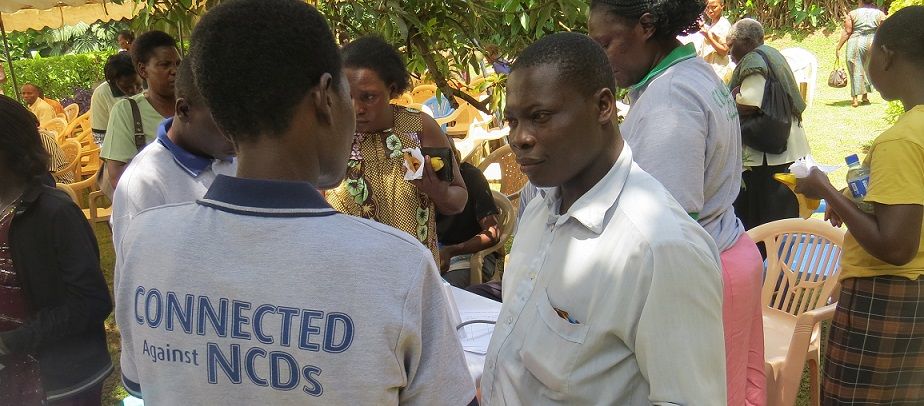
Uganda NCD Alliance Mobilizes Village Health Teams

The Uganda NCD Alliance has recently initiated basic NCD training for Village Health Teams around Kampala. I've included the news release below - feel free to email me for further information (gpaton@uncda.org). I'm also pleased to share our new website - please have a look atwww.uncda.org! Cheers, Greg
----------------------
The Uganda Non-Communicable Disease Alliance (UNCDA) has taken an important step forward in piloting a sustainable community based model for NCD screening and education.

On 29 May, 2013, representatives of the UNCDA met with local Village Health Teams (VHT) in areas surrounding Kampala to train the teams to provide basic NCD education and referral services to community residents. The teams will be equipped with knowledge to inform people about risk factors and how to prevent NCDs, and will refer community members to the UNCDA patient resource centre which recently opened in Kampala.

"Village Health Teams are the first line of contact with community members seeking health services. They therefore play an extremely important role as providers of health knowledge and education", said Ms Constance Kekihembo, CEO of the Uganda NCD Alliance. "By providing them with basic knowledge about NCDs, the health teams will be able to provide basic education and referral services to the community." The UNCDA plans to conduct further training with Village Health Teams, and to explore expanding this model across Uganda.